
I commented to Joyce that we were never apart long enough to write to each other, whereupon, she got up and a few minutes later returned with an armful of correspondence we wrote to each other while I was in the second semester of my junior year of college and she was still working in Southern Jersey. (We were planning a wedding!)
I did not remember we did this. I am glad she saved them, though. I have been reading somewhere around 175 letters. There is a story here. Much of what we discussed was the kind of wedding detail that everyone talks over but there were elements that required small miracles to make it all come together—and for that, I affirm, there was God!
Some details of our wedding needed to “fall in place” that couldn’t have by happenstance. Two details come to mind: One, I needed a good job to support the marriage while finishing my senior year of schooling. I had no car and no license to drive one. Family argued that I should return to the place of my Nativity and save money. Talk marriage in a year. The other puzzle piece of obvious importance was a place to live. There were none according to the realtors within a 10 mile radius of the school. Married couples on campus had already gobbled them up. Beside, I had no job, remember!
The year before, the faculty advisor for the yearbook offered me the assistant editor position in training for Editor-in-chief in my Senior year. It didn’t work out as planned, but I was introduced to the current Editor in Chief, Don, who also worked at Longacres in Franconia, PA where they made chicken products. A month before the wedding following an intense conversation with the Lord, I met Don who approached me with a job opportunity to work there. The following year, an H.R. department was set up at the company making this kind-of offer impossible. But for now, according to the correspondence, I would start at 1.80 an hour, a fantastic wage in those days.
The apartment? I met Frank while attending school. Frank was refused admission because he did not complete high-school. Frank came across state from the Pittsburgh area to attend the school and he too was looking for a place to live for a family of four. There was a two room and a bath a mile down the hill from the college that was too small for them which the local realtor forgot he had. When Joyce and I enquired, we were turned away the first time but Frank said, “Go back! It’s there!” We did and the realtor apologized. Fifty dollars, utilities included. I still wonder how many students sought out that agency for something and were turned away. Did God hold it for us, using a brother who traveled across the state to attend a college that didn’t want him?
The letters also documented a very stressful disapproval of both families and some friends that we were planning a wedding in August—just 9 months after we met on campus in ’67. With the job and apartment we moved the wedding up to June 22. This week will complete 53 years together..
 Likeness means similitude or resemblance, which, indeed, speaks to the external appearance of one person compared to another. Seth did look like Adam, his dad. “Seth was, [in turn?] in [Adam’s] own likeness, after his image.” [Genesis 5:3] If this, however, means a father-son relationship could be established in their genomes (and indeed it could) the Biblical terms “image” and “likeness” must be expanded2 to explain Adam in God’s image because “God is a Spirit.”[John 4:24] If I may paraphrase the rest of the Savior’s words: We relate to Him, to God, on a spiritual—not a physical—level. If you want to stroke His face, it is done in intercessory prayer not in a physical sense.3
 The word “image” is spoken of painting4 and sculptures.5 Adam was made in God’s image, as if God formed him from the dust of the earth while staying true to the details of His own image [Genesis 1:27].
 So, what is the comparison being made in Scripture between God and us? We used to maintain that unlike animals, we have a soul.
 The church is not an organization as much as it is an organism.1 The church does not need to be incorporated as much as it needs to be empowered.2 The church does not follow a constitution; it follows a commission.3 The church’s success was never dependent on finance as much as faith, not planning as much as prayer, not ritual but righteousness for its identity, not size but the Spirit, not government but God, not our vision but His. It is this church that will survive through a postmodern age as a witness. It is this church that can adjust to a new normal without compromising its witness and without losing its own identity in a confused world of unanticipated change.
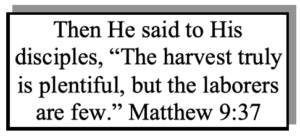 Early this morning I awoke meditating on Jesus’ “Sermon on the Mount” (we are going over this in our Saturday Zoom Bible study) and it “hit” me what Jesus was doing then that we should consider now. Beside the content of the sermon, itself, Jesus was preparing a dozen men not just to minister to others but to extend His ministry. They would not be following an academic education or a doctoral thesis or the science behind demographic studies of church growth—as much as these might appear to address the need for harvesting souls. They were to allow His ministry in Israel and beyond to continue, after His ascension, through His church.
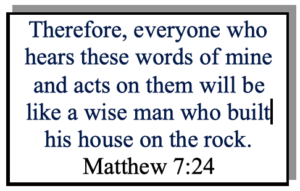 The Beatitudes are universal attitudes which Christ sinlessly exemplified. The secret to their endurance and influence in empowering God’s people for service is that they transcend cultural change. The application of them and the many principles outlined by the Savior recorded in Matthew 5-8 are key to our identity as being like Christ—extending His ministry—as we hope to in a cultural setting so much at odds. They profile the followers of the Savior who are passionate about extending His ministry in their own.
 Looking at God, then, through a single lens (and that of divine love), interpreting His actions in terms of His love for us, not only inspires our understanding of God’s Word (it is biblical) but it explains everything about our relationship with Him as believers. (Jeremiah 29:11) It is our limited reasoning, limited by how we experience life and what we have learned about our own humanity that we, in error, compare our thoughts with God’s and asks questions about Calvary that may not be answerable—for now. When we talk about justice, we picture a courtroom and a jurist but not necessarily what the Bible means by righteousness. (1 Corinthians 1:30) When we talk about “the Law,” Mosaic or criminal or whatever, there is much we do not know about God’s judgment seat. What is the “law of Christ”? (Galatians 6:2) Or the “Law of the Spirit” (Romans 8:2)
 Simplicity teaches that He does all things as an expression of His love. “The doctrine of simplicity, then,” Prof. Vidu explains, “must be defined such that mercy and justice are two different names for God’s only moral attribute: his love. Mercy and justice are therefore synonymous.”2 (Ps. 33: 5; 89:14