
A metaphor is a thing regarded as representative or symbolic of something thought unrelated, a comparison between two ideas as if these were synonyms, We use them in sharing the Gospel:
“That was the true Light, which lights every man that comes into the world” [John 1:9].
Paul did not call Jesus our redeemer but our redemption [1 Corinthians 1:30] . He was the ransom price to free us from sin? But will these metaphorical or picturesque representations of our Lord’s crucifixion be misunderstood as gibberish among a peoples or tribal culture, for whom the words, themselves, have no immediate significance?
 When Jesus declared, “Very truly I tell you, unless you eat the flesh of the Son of Man and drink his blood, you have no life in you” [John 6:53] John witnessed “On hearing it, many … said, “This is a hard teaching. Who can accept it?”
“Western interpretations of the atonement,“ Philip Jenkins wrote in The Next Christendom, “ …can be traced to the writings of Saint Anselm around 1100. For Anselm, human sins were like grievous offenses committed against a great Lord, debts that required a ransom or restitution of great price, which, in Christianity took the form of the death of God’s Son. … The biblical Lord became a feudal lord” [Page 7].
Eastern Orthodoxy saw this interpretation for Jesus’ crucifixion as “overly legalistic.” To this we add that the word “atonement” itself was brought into English by William Tyndall centuries later. The concept of “debt” was replaced by John Calvin and the Reformation with talk of criminality, punishment, and God’s wrath.
 Religious training has given us a degree of comfort with the Biblical system of sacri- fices as representative (a type of) Jesus’ death, but to what extent should we consider this metaphor as explicatory in other cultures? How useful is it in a given cultural setting to evangelize a people?
- “Behold the Lamb of God which taketh away the sin of the world” [John 1:29].
- “[Jesus], after he had offered one sacrifice for sins for ever, sat down on the right hand of God” [Hebrews 10:12].
Catholic missionary, Vincent Donovan, asked in “Christianity Rediscovered” [page 21] “Just what was the essential message of Christianity?” He explained, “With Africans the purpose of words is not to establish logical truth, but to set up social relationships” [Page 22]. He went on to assert that “their culture is all encompassing and all important” [Page 23].
Philip Jenkins in his work, “The Next Christendom” said, which I take as a caution against confusing, diluting, or otherwise compromising the message of our Lord’s Crucifixion,
“Gradually Catholic clergy (as missionaries to Latin American in the 1700’s) succeeded in adapting the liturgy and sacraments to the native worldview and its customs, in a highly successful act of enculturation“ [Page 38].
Enculturation! Catholicism endeavored to inculcate the moral and spiritual message of the Cross as part of the cultural identity of Latin Americans but may have only succeeded in providing a modified religious ritual acceptable to both the Aztecs and Rome. How real was Calvary’s impact on their “faith”?
And how much should this truth impact the very culture it transcends? Don Richardson presented Christ to the Sawi people of the Netherland New Guinea [now: part of Indonesia] God’s “peace child” after their use of the term within their culture.
So how do we introduced to them salvation, grace, holiness, God’s love, in order that they might make these representative of their lifestyle and, in turn, promote the message without losing its emphasis, its inspiration, the “power of the Gospel”? After all, this is, indeed, the task before us!
For I am not ashamed of the gospel, because it is the power of God that brings salvation to everyone who believes: first to the Jew, then to the Africans, Indians, Nepalese, Indonesians, Argentinians, … Romans 1:16.
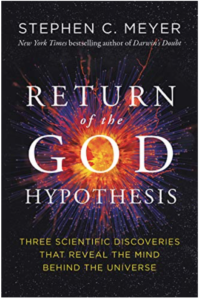 But enter the writings of the French philosopher, Jean-Paul Sartre, who concluded “No finite point has any meaning unless it has an infinite reference point.” What is the value of this life unless there is a transcendent personal God? One good thing became apparent to Meyer: he was not going insane; he was becoming a philosopher.
 Viktor Frankl, who, little doubt, amassed profound wisdom from his experience in a German concentration camp, and who, consequently, wrote his classic work, “Man’s Search for Meaning,” reminded us that such questions are okay to ask.
 some of the latest scientific discoveries in a number of fields, including, mathematics, astronomy, astro physics, physics, cosmology, and genetics, that challenge the supposition that the universe and then life came by chance rather than by design. Mathematician and philosopher William Dembski established a rigorous method for detecting intelligence: first what has come into existence must be calculated as extremely improbable by the laws of probability and, secondly, once it does exist it must serve a specific function. An example would be the creation of carbon-based protein out of hydrogen and helium, the basic building blocks of the universe. Carbon-based compounds, thus formed, are the basis of all life.
 The difference in masses between quarks in an atom cannot exceed one mega-electron volt—this is the equivalent charge of .0001 percent of the charge of the largest known quark—without producing an all proton or neutron universe where life could not exist. “Much more striking,” Meyer informs our faith, “the masses of “up quarks” and “down quarks,” the constituent parts of protons and neutrons, must have precise values to allow for the production of the elements, including carbon, essential for a life friendly universe.”
 Consider: There are 10 with 80 zeros [ 1×1080] of particles in the known universe; so your chance of finding a specific one of these particles, while your being blindfolded and searching at random, would be 1×1080 but this is still 10 billion times better than the probability that the universe would have happened upon a life permitting strength of the cosmological constant 1090 (if just this one constant were set to a value to create a universe; still ten other factors must be fine tuned as well which, we maintain, could not happen unless an intelligent being, God, created it.)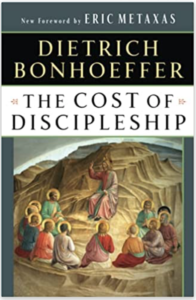
 of ours toward each other and others [Matthew 18:35]. Grace is cheapened when we are thereby forgiven without any interest in forgiving. To forgive indeed we must forgive in deed! This incorporates a desire for reconciliation. A forgiving heart holds no bitterness or vengeance. The story of grace is a story of God creating in us forgiving hearts. [It is not strange to discover that both words, grace and forgiveness, derive from the same Greek word, Ephesians 4:32.]
 15:12]. Our thoughts may become so fixed on what He did for us we don’t take serious what He intends to do through us. The rich young man toward whom Jesus’ heart was warmly drawn is not really the story of liquidating one’s wealth for charity as it is relinquishing all personal ambition and interest for the glorious vision of following Him as one of His disciples [Luke 18:22]. Bonhoeffer calls fellowship, followship, and rightly so [1 Corinthians 1:9].
 Grace, therefore, is more than forgiveness, it is God’s empowering to follow in our Lord’s footsteps. [Seventeen times in the Gospels we read Jesus instructing His disciples to “Follow me.”] Justification is a marvelous gift of God but the same word also translates “righteousness” [Kittel, vol II, page 202ff]. We should not claim justification if we do not live it! Grace is cheapened if it is only a declaration of righteousness without sanctification. As we can rightly maintain God’s gift of grace is working on us [“from glory to glory”] transforming us into the image of Christ [2 Corinthians 3:18]. Justification leads to glorification [Romans 8:30]. It has to! It is cheapened if it becomes mere religious duty or devotion or a Sunday morning habit.
 Grace is cheapened if we continue in sin [Romans 6:1-2]. Cheap grace is a carte blanche to sin and is not what God offers! As Bonhoeffer, in other words, noted, “acquired knowledge cannot be divorced from the experience in which it was acquired” [Bonhoeffer, page 51]. “The call to discipleship,” the pastor affirmed, “is [the] gift of grace” [italics added. Bonhoeffer, page 51]. There is no biblical word for academic knowledge.
 Here is where Bonhoeffer waxes eloquent and inspired. “Do we also realize that this cheap grace has turned back upon us like a boomerang?” he asked. “The price we are having to pay today, “he observed, “in the shape of the collapse of the organized church [I think not just a dwindling membership but the apparent absence of commitment to pastoral vision] is only the inevitable consequence of our policy of making grace available to all at too low cost. We gave away the Word … wholesale.” [Bonhoeffer, page 54] Bonhoeffer recognized with sadness the Church’s message being made more seeker friendly than challenging.
 The encouraging thought is that Jesus gave us the answer in His “Sermon on the Mount” and added “it’s easy” [Matthew 11:30]. Jesus used the word, “Happy” [blessed] as He unfurled the scroll of such a revelation. There is a bit more to this truth than what is found in Matthew’s record but it is all good—excitingly good.
 Yes, God knows when this or that in our circumstance is a hinderance to what He is perfecting in us and He will remove it accordingly (Revelation 3:7), but somehow our humanity is very much a part of life as it always was. The temptations are just as real, sickness is just as real. We may become flummoxed about the paradoxical inconvenience of pain while knowing that God’s faithfulness and love were never more real as when we are hurting. Suffering on many levels remains a part of life as it did for the Savior!
 But this is as it should be because as much as any church endorses discipleship, our knowledge of the Bible remains incomplete—a confession which should be an encouragement. A close friend who has been pastoring now for decades admitted with a soupçon of irony that if Jesus will grade his understanding of all Biblical truth at 10% when God calls on him, he will be humbly grateful for having had the opportunity to learn that much (1 Corinthians 13:12). He speaks for me, too.
 This is a mistake, if the narrative being sold by the media is bought by the church to live below or outside the Biblical message! And that much we do know! It is Eve and the snake all over again! The Devil’s deception always begins with “Did God actually say.” The devil’s rhetoric is understood to mean, “God didn’t mean what you think He meant.” And yet nothing could be said in simpler terms: “this tree here, avoid it!” (Genesis 3:3)! The account begins with the devil spouting, “APH!” It is a rhetorical “yea,” ”really!” or “indeed!” It is an impassioned challenge to what we know all along about what God did say!